
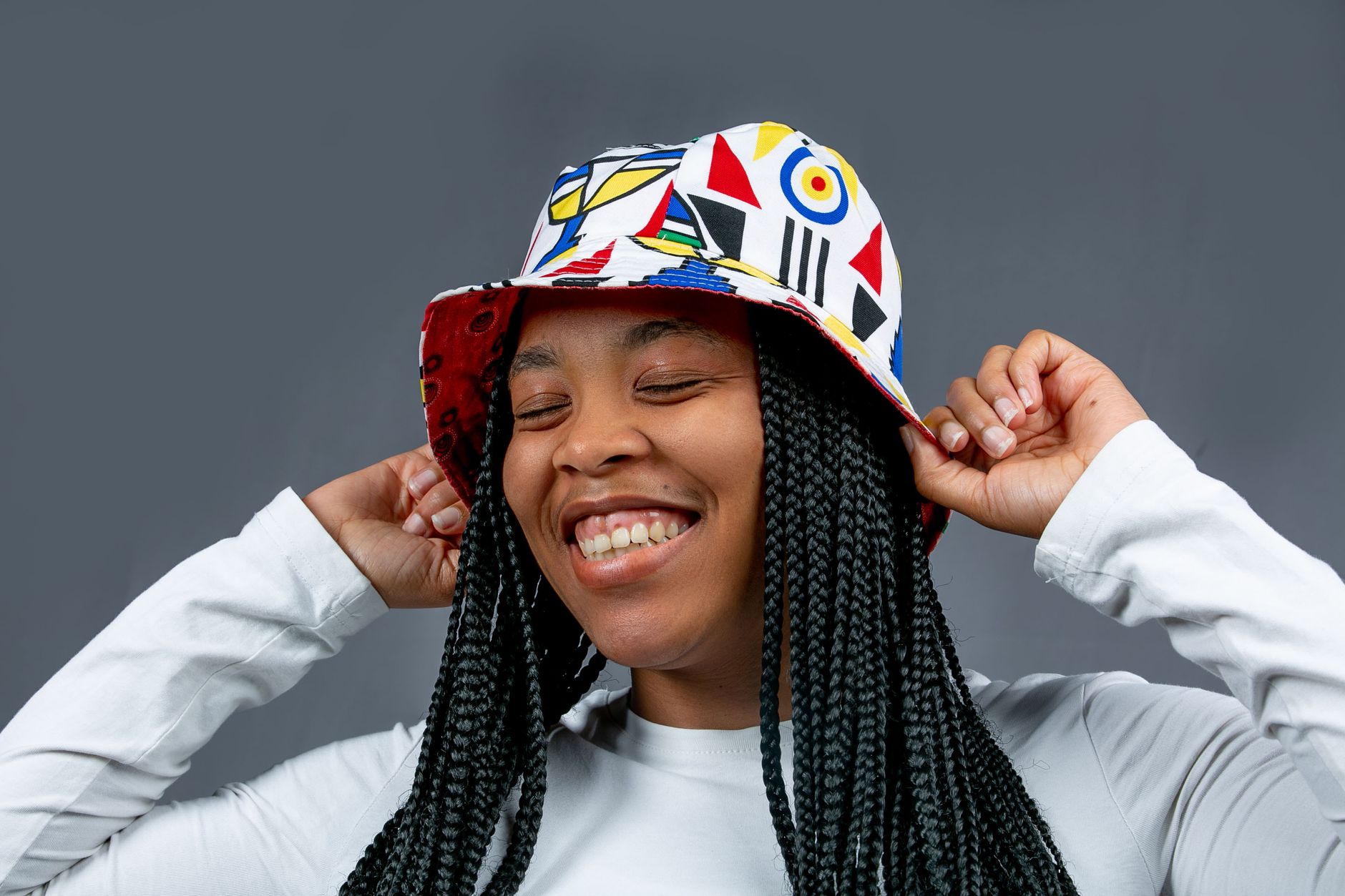
Fall Hat Guide: Transition Your Hair from Summer Heat to Autumn Cool
Late August. The air's still warm, but there's that hint of crispness in the morning. You're reaching for lighter jackets, thinking about boots, and realizing your summer hat rotation might need an autumn refresh.
For people with voluminous hair — afros, locs, braids, twists — seasonal transitions aren't just aesthetic choices. They're about protecting your hair through real environmental shifts. Temperature drops. Humidity changes. Wind picks up. UV intensity shifts.
Your hair reacts to all of these, and your hat choices should too.
Here's your fall transition guide, built specifically for voluminous hair and the reality of autumn weather.
The Autumn Hair Environment: What Actually Changes
Before we talk about hat styles, let's talk about what autumn actually does to your hair. Because the transition from August to October isn't just about cooler temperatures — it's about multiple environmental factors hitting your hair at once.
Temperature Swings
Morning chill. Those crisp 50°F mornings when you step out and need something on your head. Your hair contracts in the cold, then expands as the day warms up. That expansion-contraction cycle creates frizz, breakage, and structural stress.
Afternoon warmth. By 2 PM, it's back to 75°F. Your hair's been through a temperature roller coaster, and if your hat doesn't accommodate that shift, you're dealing with flattened crowns, compressed styles, and that "what happened to my hair" feeling by dinner.
Indoor heating. Buildings crank up the heat. Your hair goes from cold outdoor air to dry, heated indoor air. That moisture stripping creates frizz, static, and that flyaway situation that makes any hairstyle look messy.
Humidity Shifts
Summer humidity lingering. In early autumn, especially in warmer regions, humidity is still high. Your hair's still swelling, still reacting to moisture, still prone to frizz when it dries.
Dry air arriving. As autumn progresses, air gets drier. Your hair loses moisture faster, becomes more brittle, and needs different protection than it did in July.
The humidity yo-yo. One day it's humid, the next it's dry. Your hair can't catch up, and hats that don't breathe or don't protect create moisture imbalances that lead to breakage and dullness.
Wind and Weather
Autumn winds. Fall is windy season. Coastal gusts, open-space drafts, that autumn breeze that sounds poetic until it's tangling your hair and creating friction against your hat.
Rain showers. Autumn rain is different from summer storms — it's colder, it's frequent, and it sits on your hair differently. Your hat needs to handle damp conditions without trapping moisture or creating mildew.
UV intensity changes. UV is still strong in September, but it's different from July UV. More scattered, coming through clouds, hitting at different angles. Your sun protection needs to adjust, not disappear.
The Three-Hat Fall Transition Rule
Here's the thing: you don't need six different hat styles for autumn. You need three hats that actually work for the transition season. Three hats that handle temperature swings, protect your hair through changing conditions, and fit your voluminous hair through every weather shift.
Hat 1: The Deep-Crown Fedora — Your Fall MVP
Why it's essential: Structured protection, deep crown accommodates layered hair, works across temperature ranges, polished for autumn aesthetics.
What to look for:
- Deep crown (4.5" minimum, ideally 5"+ for voluminous hair)
- Quality materials (felt, wool blends — handle cold mornings and warm afternoons)
- Structured brim (maintains shape in autumn winds)
- Neutral autumn tones (camel, rust, olive, charcoal, deep burgundy)
- Adjustable fit (sweatband with sizing or inner elastic)
- Breathable construction (vents or quality materials that don't trap heat)
Why it works for the transition:
- Deep crown accommodates your hair as it reacts to humidity changes
- Quality felt or wool balances warmth with breathability
- Structured brim protects from wind without being overwhelming
- Neutral colors work with every autumn outfit
- Adjustable fit accommodates hair volume shifts from day to day
Hair it fits: Protective styles (braids, twists, locs), natural afros, layered cuts, any style that benefits from structured protection during weather transitions.
BigHeadz pick: Look for fedoras with genuine deep crowns (not the shallow 3" crowns mainstream brands call "oversized"). We curate felt and wool-blend fedoras with 4.5"+ crowns that actually accommodate voluminous hair.
Hat 2: The Packable Wide-Brim — Your Variable Weather Essential
Why it's essential: Maximum sun protection for lingering UV, handles rain showers, packable for variable conditions, deep crown for post-wind hair recovery.
What to look for:
- Packable construction (designed to fold/roll and bounce back)
- Deep crown (4.5" minimum for voluminous hair)
- Wide brim (3.5"+ for face and neck protection)
- Water-resistant materials (handles autumn rain without damage)
- Adjustable fit (inner drawstring or elastic band)
- Breathable materials (straw blends, cotton blends)
Why it works for the transition:
- Sun protection handles lingering UV through September and October
- Water-resistant design manages autumn rain showers
- Packable means you can carry it for weather that changes throughout the day
- Deep crown gives your hair room after wind exposure
- Wide brim protects from both sun and light rain
Hair it fits: Full afros, large protective styles, voluminous curls, any high-volume look that needs maximum room and protection from variable weather.
BigHeadz pick: Packable sun hats with water-resistant treatments and genuine deep crowns. Avoid the shallow beach hats that sit on top of your hair instead of covering your head.
Hat 3: The Casual Bucket — Your Everyday Autumn Essential
Why it's essential: All-around protection for daily wear, casual aesthetic for autumn weekends, handles wind without drama, breathable for temperature swings.
What to look for:
- Adequate brim size (2.5"+ for actual protection)
- Roomy crown (not shallow — look for vertical room, not just width)
- Autumn-friendly materials (cotton, cotton-blends, heavier weights than summer buckets)
- Adjustable or stretch fit (accommodates hair volume shifts)
- Easy to clean (autumn weather brings dirt, dust, and general grime)
Why it works for the transition:
- Casual vibe works with autumn weekend outfits
- Roomy crown accommodates hair reacting to humidity changes
- Stays secure in autumn winds without being overwhelming
- Heavier materials provide light warmth on cooler mornings
- Easy maintenance for frequent wear
Hair it fits: Braids, twists, locs, natural texture — anything that benefits from all-over protection without the structured feel of a fedora.
BigHeadz pick: Cotton or cotton-blend bucket hats with genuine roomy crowns. Avoid the trendy shallow buckets that sit on your hairline instead of covering your full head.
The Crown Depth Reality: Why Autumn Transition Requires Real Depth
Here's the truth about fall hat shopping: most guides assume you have average-sized heads and average hair volume. They tell you to "switch to fedoras" and "add structure" without considering whether those hats actually fit your hair.
BigHeadz exists because we know that's not enough.
Why Shallow Hats Fail in Autumn
Temperature compression. When temperatures drop, your hair contracts. When you wear a shallow hat, that contracted hair gets compressed even further, creating flattened crowns that take hours to recover.
Humidity reaction. As humidity shifts from high to low, your hair swells then shrinks. Shallow crowns don't accommodate this volume shift — they squeeze your hair into a fixed space, creating breakage and frizz.
Wind flattening. Autumn wind tangles and flattens your hair. A shallow crown doesn't give it room to recover — it holds your hair in its wind-flattened state instead of allowing natural volume to return.
Layered hair needs space. Autumn often means layered cuts, protective style adjustments, or transitioning from summer braids to autumn twists. These styles need room. Shallow crowns compress layered hair into unnatural shapes.
The BigHeadz Depth Standard
Every hat we curate has real depth — 4" minimum, often 4.5" to 5" for maximum volume accommodation. We don't sell "oversized" that's actually medium with stretch. We sell hats that actually fit.
For autumn transitions, depth isn't optional — it's essential.
Cold morning accommodation. Your hair contracts in the cold. Deep crowns give it room to contract without being flattened.
Humidity buffer. As humidity fluctuates, your hair volume shifts. Deep crowns accommodate those shifts without squeezing or compressing.
Wind recovery space. After wind exposure, your hair needs room to regain natural volume. Deep crowns allow that recovery.
Layered styling room. Autumn hairstyles often have more layers or different protective styles. Deep crowns accommodate those variations without compromising fit.
Autumn Styling: How to Wear Your Transition Hats
Now that you've got the right hats, here's how to style them through the autumn season.
Early Autumn (Late August – September)
Morning layering. Pair your fedora with light layers — denim jackets, cardigans, blazers. The structured brim balances the casual vibe of transitional pieces.
Weekend farmer's markets. Packable wide-brim for sun protection during morning markets, bucket hat for casual afternoon hangs.
Outdoor dining. Alfresco season continues through September. Your fedora provides polished protection without overheating.
Hair consideration: Your hair might still be in summer protective styles. Deep crowns accommodate those styles without needing to switch your whole routine immediately.
Mid-Autumn (October)
City exploration. Fedora for museum visits, gallery hops, city walking. Structured protection meets autumn aesthetics.
Park hangs. Packable wide-brim for sunny park days, bucket hat for casual picnics and low-key hangs.
Casual Fridays. Bucket hat with sweaters and boots — relaxed but put-together for work-from-home or casual office days.
Hair consideration: This is peak transition time. You might be adjusting protective styles, trying new cuts, or letting summer braids grow out. Deep crowns accommodate all of these variations.
Late Autumn (November)
Cozy cafe days. Fedora with chunky knits and warm layers — your autumn uniform.
Late-season outdoor events. Packable wide-brim for sunny November days when UV is still present but temperatures are dropping.
Casual errands. Bucket hat with hoodies and denim — effortless autumn style.
Hair consideration: Your hair is fully in autumn mode — likely less humidity-reactive, possibly in new protective styles for winter prep. Deep crowns continue to provide room and protection.
Hat Maintenance: Keeping Your Autumn Hats Fresh
Autumn weather creates different hat challenges than summer. Here's how to keep your hats in top condition through the transition season.
The Autumn Hat Stressors
Dust and dirt. Fall winds kick up dust, pollen, and general debris. Your hats collect this, and it transfers to your hair.
Rain exposure. Autumn rain is frequent and can sit on hat materials. Without proper care, this creates mildew, staining, and material damage.
Temperature storage. Going from cold outdoor air to warm indoor spaces creates condensation. Hats need time to dry and air out.
Frequent wear. You're wearing hats more often in autumn than summer. More wear means more buildup — sweat, hair products, natural oils.
Maintenance Routine
Daily rotation. Don't wear the same hat two days in a row. Materials need time to dry, and your hair needs variety in compression points.
Air out hats overnight. Don't store hats immediately after wearing. Let them air dry fully, especially if they've been exposed to rain or humidity.
Brush felt and wool. Use a soft brush to remove dust and dirt from felt and wool fedoras. Brush in one direction, with the nap, not against it.
Spot clean as needed. For minor stains on cotton or canvas materials, spot clean with gentle soap and water. For felt or wool, use specialized hat cleaners or professional cleaning.
Store properly. Use hat boxes or proper storage. Avoid crushing hats under coats or in crowded closets. Stuff crowns with acid-free tissue paper to maintain shape.
Check for moisture damage. After rainy days, inspect hats for water spots, mildew, or material warping. Catch issues early for easier fixes.
The BigHeadz Quality Advantage
We curate hats made from quality materials because they handle autumn transitions better. Felt that resists water spots. Wool blends that breathe without overheating. Cotton that cleans easily and maintains structure.
Cheap synthetics trap heat, create static, and fall apart after one autumn season. Quality materials last for years.
The Transition Advantage: Why This Approach Works
Here's the secret to autumn hat success: you don't need options. You need the right options.
Three hats. Specific purposes. Fits your hair. Handles the transition.
That's it.
Autumn transitions are complex — temperature swings, humidity shifts, wind, rain, UV changes. Your hat needs to handle all of these without you thinking about it.
For people with voluminous hair, this approach isn't just about style. It's about refusing to compromise on fit, protection, or hair health just because the seasons are changing.
Deep crowns that accommodate your hair through humidity shifts. Quality materials that handle temperature swings. Adjustable fit that stays secure in autumn winds. Real sizing that actually fits.
Autumn shouldn't mean wrestling with hats that don't fit or damaging your hair with seasonal exposure. It should mean upgrading your protection with smarter choices.
Find your autumn transition hats at BigHeadz.
Not sure which hat style works for your hair type and autumn routine? Tell us your hair type, your local autumn climate, and your typical autumn activities — we'll match you with the perfect transition hats.
And yeah — we ship fast. Autumn weather waits for no one, and neither should your hats.
More Articles

August Hat Trends 2026: Deep Crowns & Big Hair Styles Taking Over
Discover the top hat trends for August 2026—from deep crown fitted caps to breathable straw styles that accommodate voluminous hair without sacrificing style.
Read more →
August Transition: Hats That Take You From Late Summer to Early Fall
Late August is in-between season — beach days one week, crisp mornings the next. For people with voluminous hair, it’s time to refresh your hat rotation with breathable pieces that still provide room and protection as the season shifts. Here’s your guide to transitional hat styles that fit your hair and work from sunbreak to sweater weather.
Read more →